
You can now buy the recently released book, Fall of a Thousand Suns: How Near Misses and Comet Impacts affected the Religious Beliefs of our Ancestors. It is available through iBooks and Amazon.
This website only lists information on modern-day comets and meteor showers. The book, however, thoroughly investigates how specific ancient impacts and near misses changed religious beliefs around the world.
Meteor Showers in 2026
Twenty-seven meteor showers reach their peak during 2026. Each is listed below with the night it peaks and how much of the Moon will be lit that night, because moonlight, more than anything else, decides how many meteors you will actually see. The peak nights are the conventional dates for each shower, which shift a day either way from year to year; the Moon phase was calculated for each of those dates.
The standout this year is the Perseid Meteor Shower on August 12, which peaks at new Moon. The Geminids in December fall in a nearly dark sky as well. The Quadrantids are the unlucky ones, peaking in January under an almost full Moon.
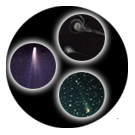 |
A meteor shower happens when the Earth ploughs through the trail of dust a comet has left behind. The grains burn up in our atmosphere, and because they all travel on the same path, they appear to stream out of a single point in the sky. |
|||
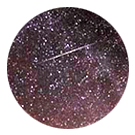 |
(Peaks January 2, 2026) |
The Moon will be 98% lit, and that much moonlight will drown out all but the brightest meteors. More about the Quadrantids. |
||
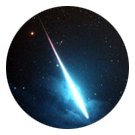 |
(Peaks February 8, 2026) |
The Moon will be 62% lit, and that much moonlight will drown out all but the brightest meteors. More about the Alpha Centaurids. |
||
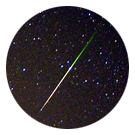 |
(Peaks February 10, 2026) |
The Moon will be 43% lit, so moonlight will wash out some of the fainter meteors. More about the Theta Centaurids. |
||
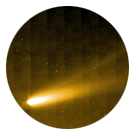 |
(Peaks April 17, 2026) |
With the Moon only 0% lit, this is a dark-sky night and even faint meteors should show. More about the Virginids. |
||
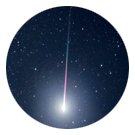 |
(Peaks April 22, 2026) |
The Moon will be 30% lit, so moonlight will wash out some of the fainter meteors. More about the Lyrids. |
||
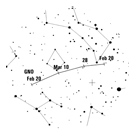 |
(Peaks April 23, 2026) |
The Moon will be 41% lit, so moonlight will wash out some of the fainter meteors. More about the Pi Puppids. |
||
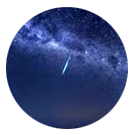 |
(Peaks May 5, 2026) |
The Moon will be 89% lit, and that much moonlight will drown out all but the brightest meteors. More about the Eta Aquariids. |
||
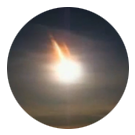 |
May Camelopardalid Meteor Shower (Peaks May 24, 2026) |
The Moon will be 58% lit, so moonlight will wash out some of the fainter meteors. More about the May Camelopardalids. |
||
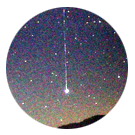 |
(Peaks June 7, 2026) |
The Moon will be 62% lit, and that much moonlight will drown out all but the brightest meteors. More about the Arietids. |
||
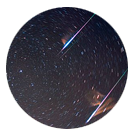 |
(Peaks June 27, 2026) |
The Moon will be 93% lit, and that much moonlight will drown out all but the brightest meteors. More about the June Bootids. |
||
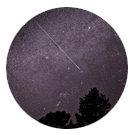 |
Southern Delta Aquariid Meteor Shower (Peaks July 27, 2026) |
The Moon will be 95% lit, and that much moonlight will drown out all but the brightest meteors. More about the Southern Delta Aquariids. |
||
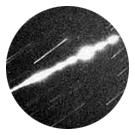 |
Alpha Capricornid Meteor Shower (Peaks July 29, 2026) |
The Moon will be 100% lit, and that much moonlight will drown out all but the brightest meteors. More about the Alpha Capricornids. |
||
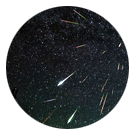 |
(Peaks August 12, 2026) |
With the Moon only 0% lit, this is a dark-sky night and even faint meteors should show. More about the Perseids. |
||
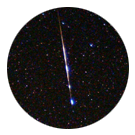 |
(Peaks August 18, 2026) |
The Moon will be 32% lit, so moonlight will wash out some of the fainter meteors. More about the Kappa Cygnids. |
||
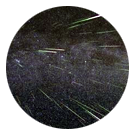 |
(Peaks October 8, 2026) |
With the Moon only 7% lit, this is a dark-sky night and even faint meteors should show. More about the Draconids. |
||
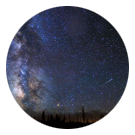 |
Southern Taurid Meteor Shower (Peaks October 10, 2026) |
With the Moon only 0% lit, this is a dark-sky night and even faint meteors should show. |
||
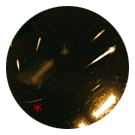 |
Delta Aurigid Meteor Shower (Peaks October 11, 2026) |
With the Moon only 1% lit, this is a dark-sky night and even faint meteors should show. |
||
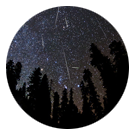 |
(Peaks October 21, 2026) |
The Moon will be 74% lit, and that much moonlight will drown out all but the brightest meteors. More about the Orionids. |
||
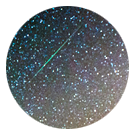 |
Leo Minorid Meteor Shower (Peaks October 24, 2026) |
The Moon will be 95% lit, and that much moonlight will drown out all but the brightest meteors. |
||
|
Northern Taurid Meteor Shower (Peaks November 12, 2026) |
With the Moon only 8% lit, this is a dark-sky night and even faint meteors should show. |
||
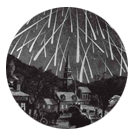 |
(Peaks November 17, 2026) |
The Moon will be 48% lit, so moonlight will wash out some of the fainter meteors. More about the Leonids. |
||
 |
Alpha Monocerotid Meteor Shower (Peaks November 21, 2026) |
The Moon will be 85% lit, and that much moonlight will drown out all but the brightest meteors. |
||
 |
Phoenicid Meteor Shower (Peaks December 6, 2026) |
With the Moon only 7% lit, this is a dark-sky night and even faint meteors should show. |
||
|
Monocerotid Meteor Shower (Peaks December 8, 2026) |
With the Moon only 1% lit, this is a dark-sky night and even faint meteors should show. |
||
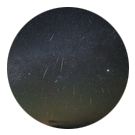 |
Geminid Meteor Shower (Peaks December 13, 2026) |
With the Moon only 15% lit, this is a dark-sky night and even faint meteors should show. |
||
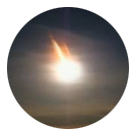 |
Comae Berenicid Meteor Shower (Peaks December 15, 2026) |
The Moon will be 31% lit, so moonlight will wash out some of the fainter meteors. |
||
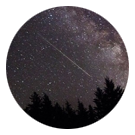 |
Ursid Meteor Shower (Peaks December 23, 2026) |
The Moon will be 99% lit, and that much moonlight will drown out all but the brightest meteors. |
||